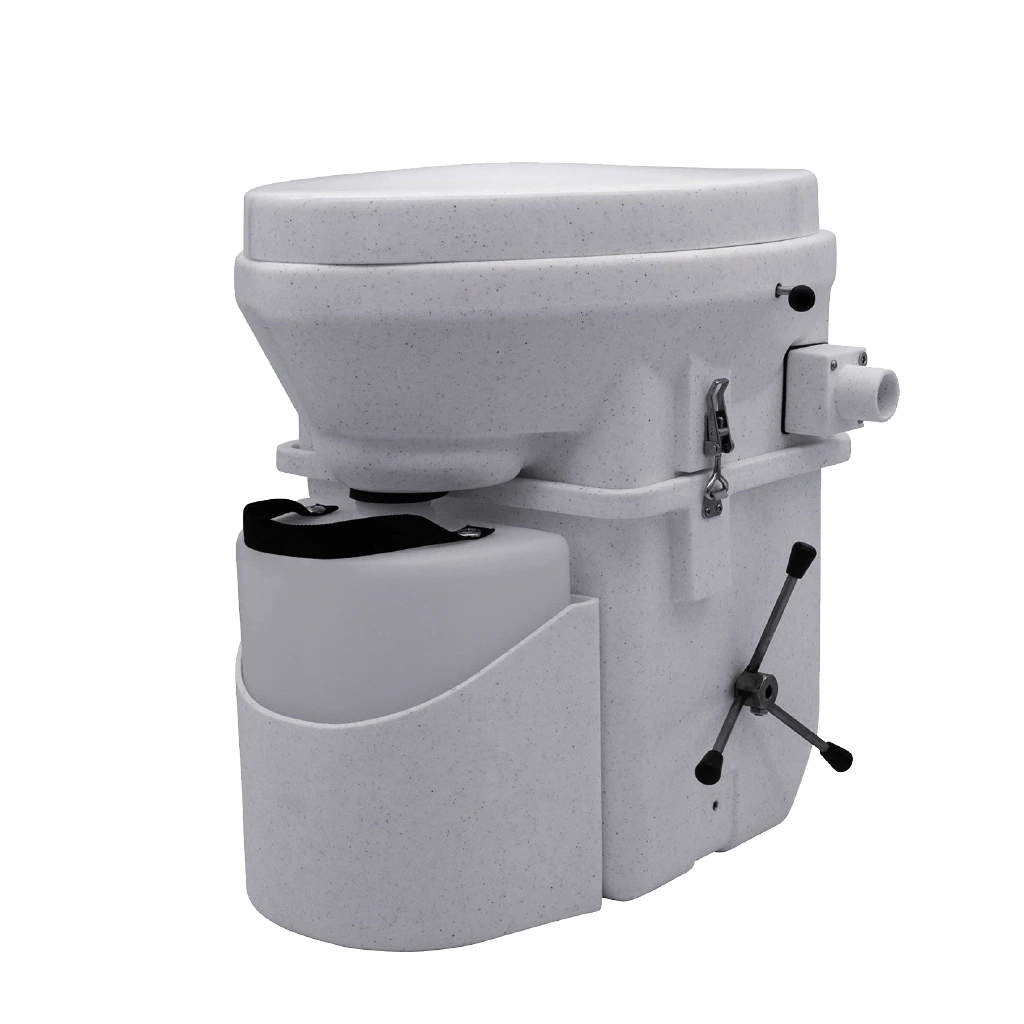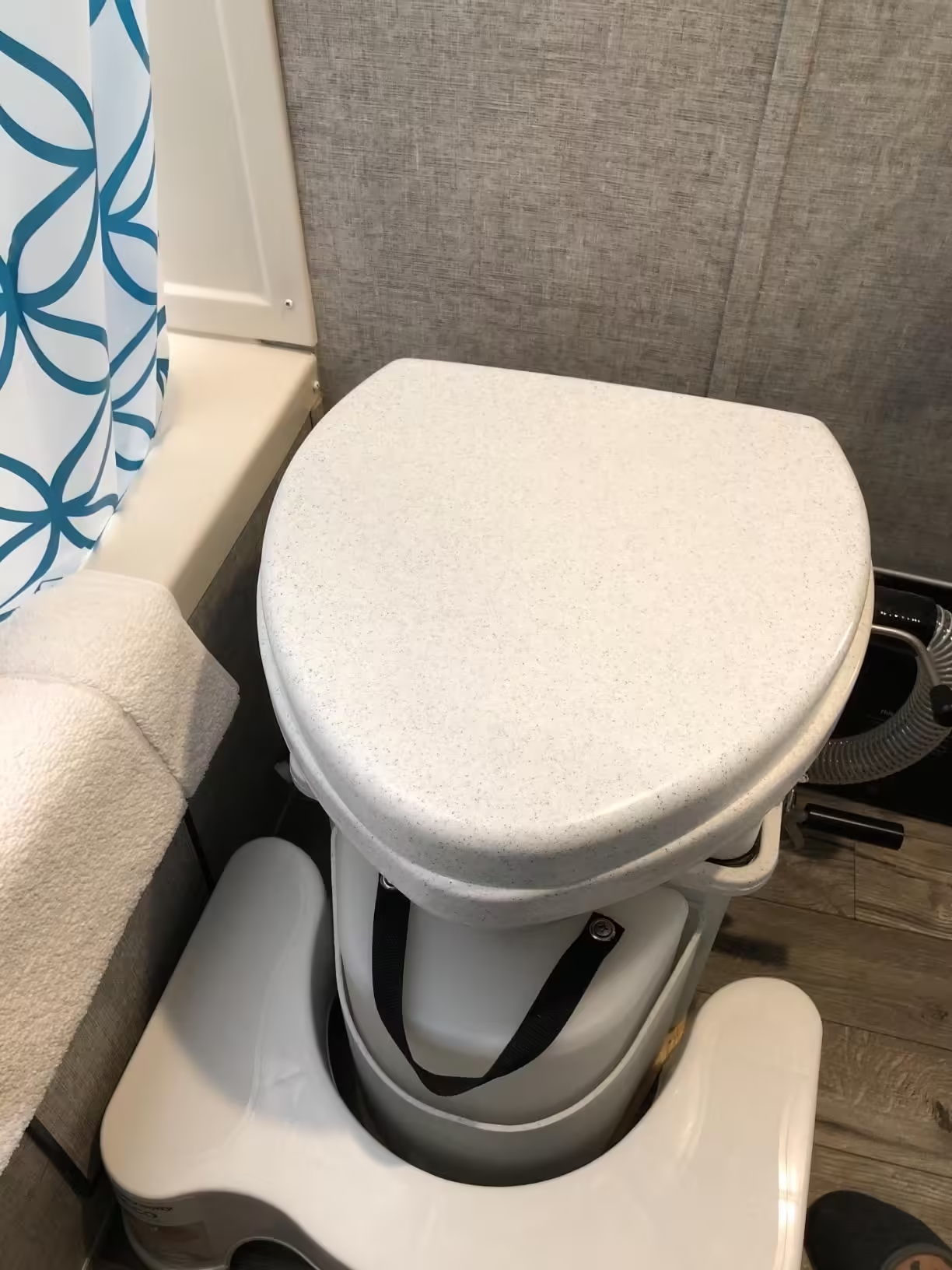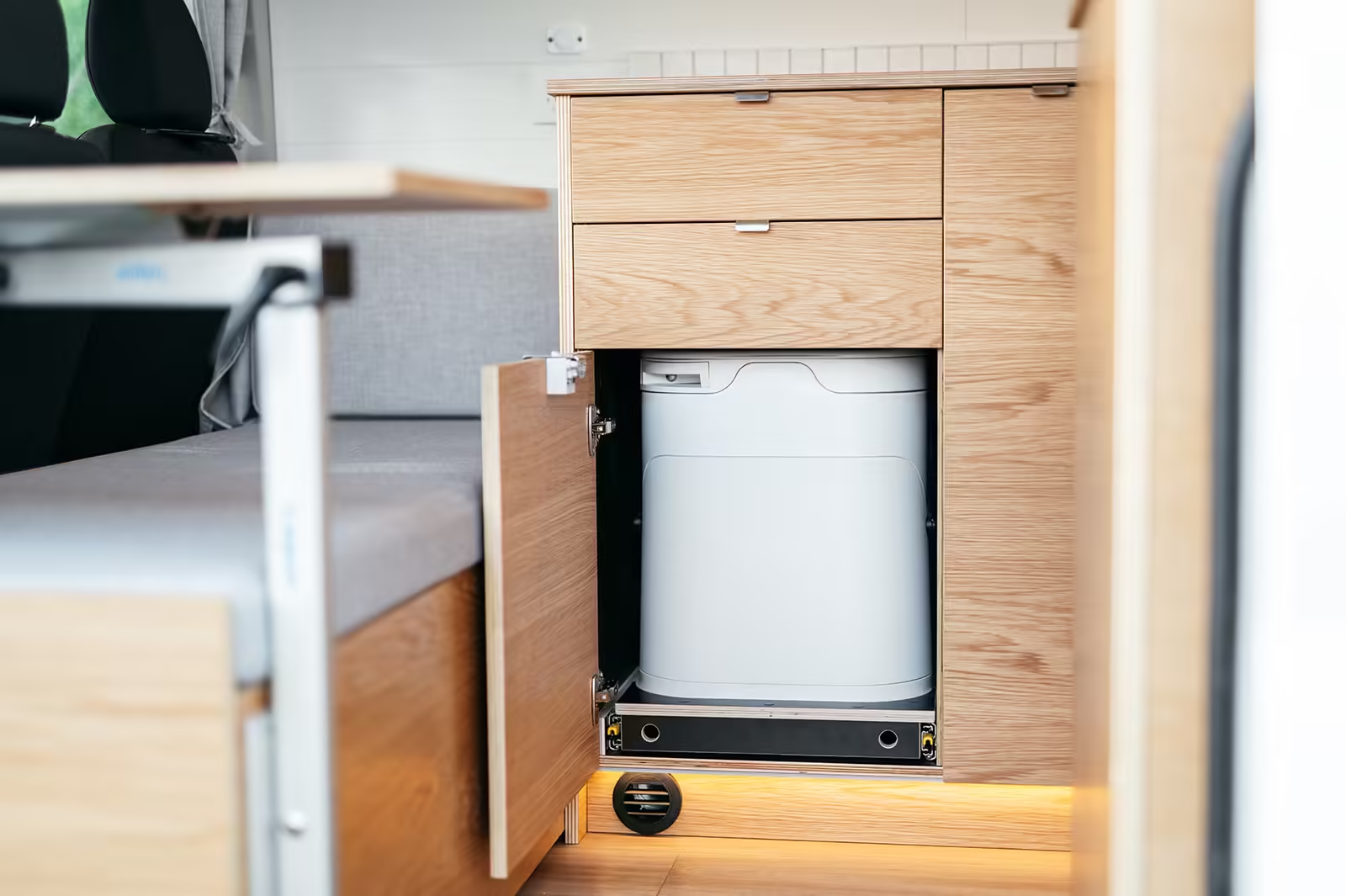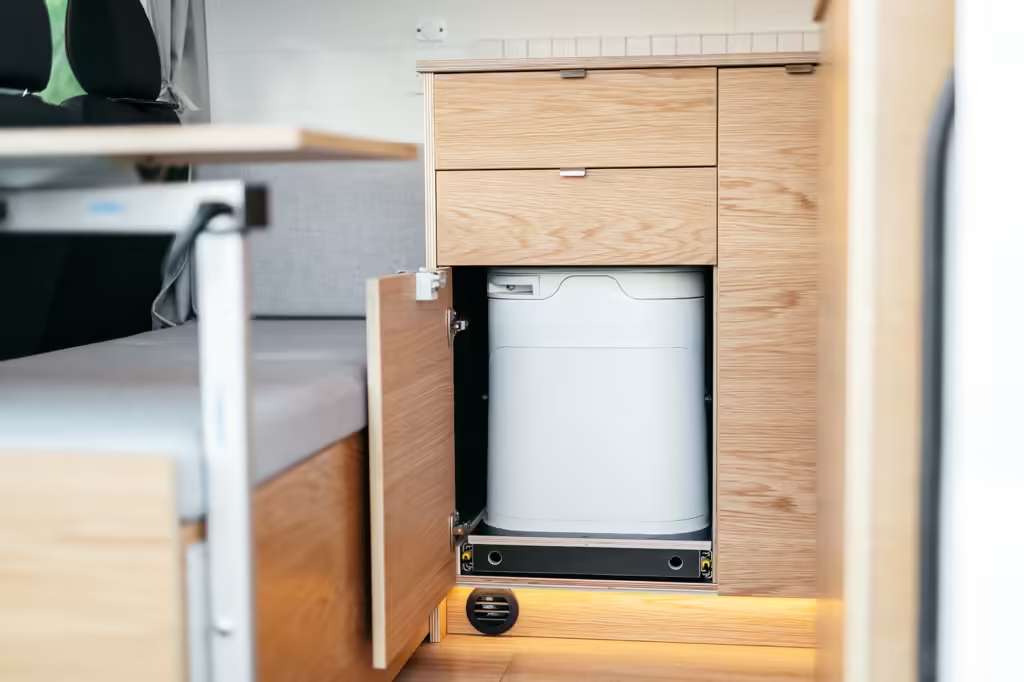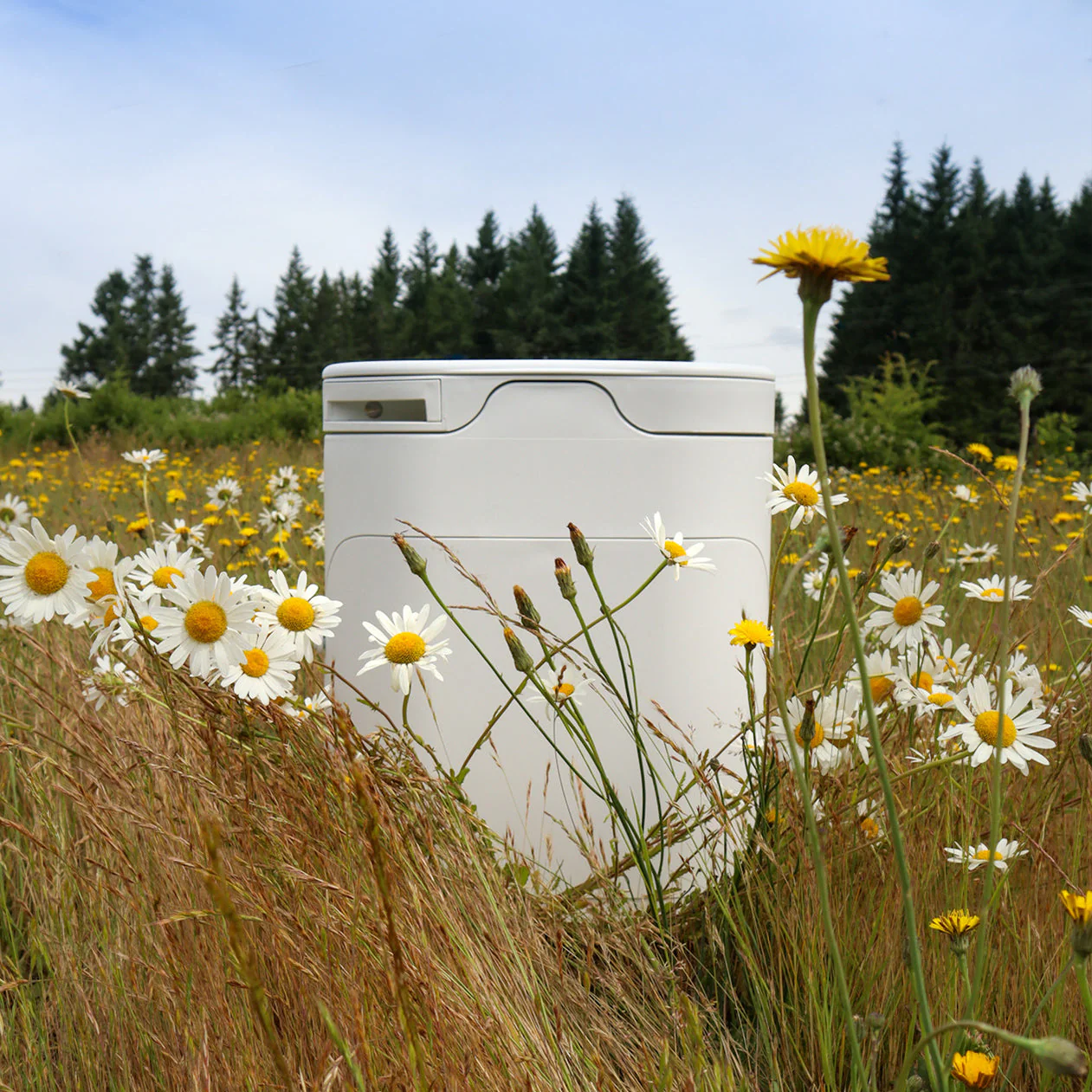
If you’ve recently installed a composting toilet — or you’re thinking about it — one of the most common questions is: what do I actually do with the solid waste? Whether you have an OGO Origin, OGO Nomad, Nature’s Head, or another composting toilet, this guide explains what humanure is, how to handle it safely, and exactly what New Zealand regulations require when it comes to disposal.
What Is Humanure?
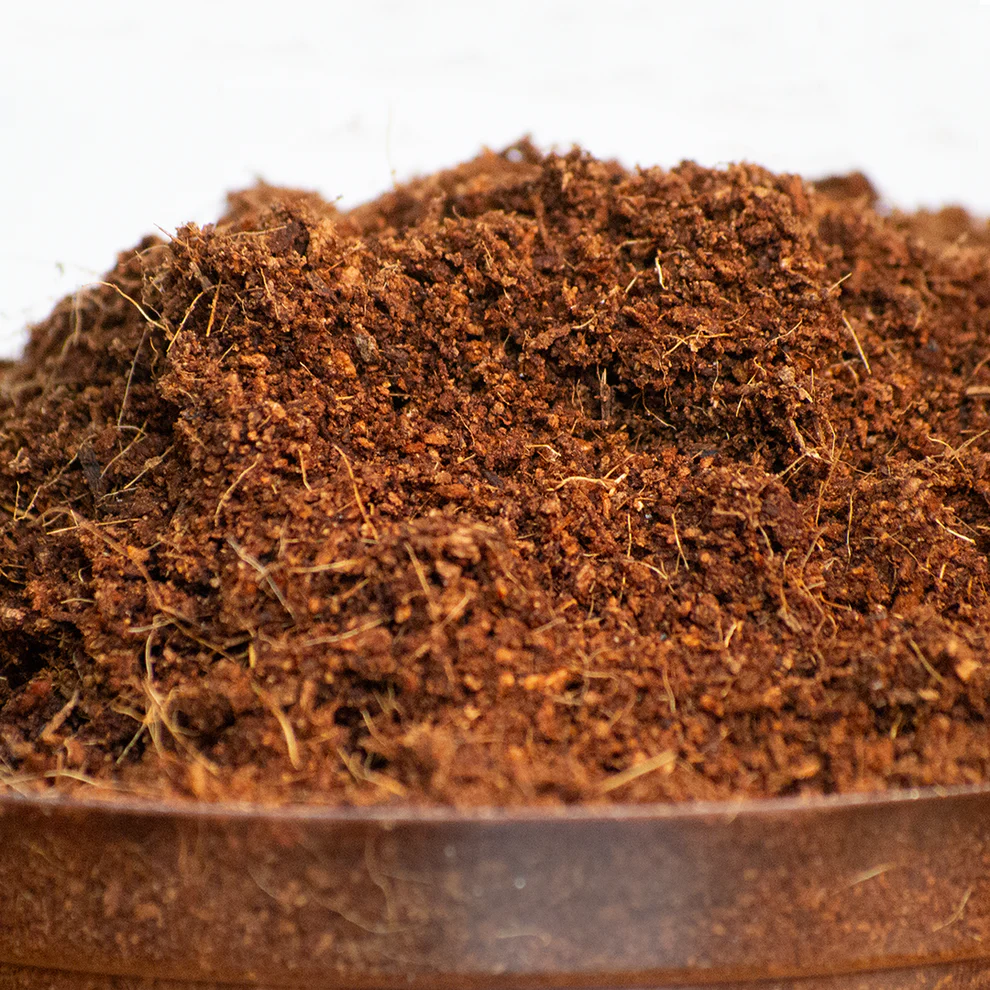
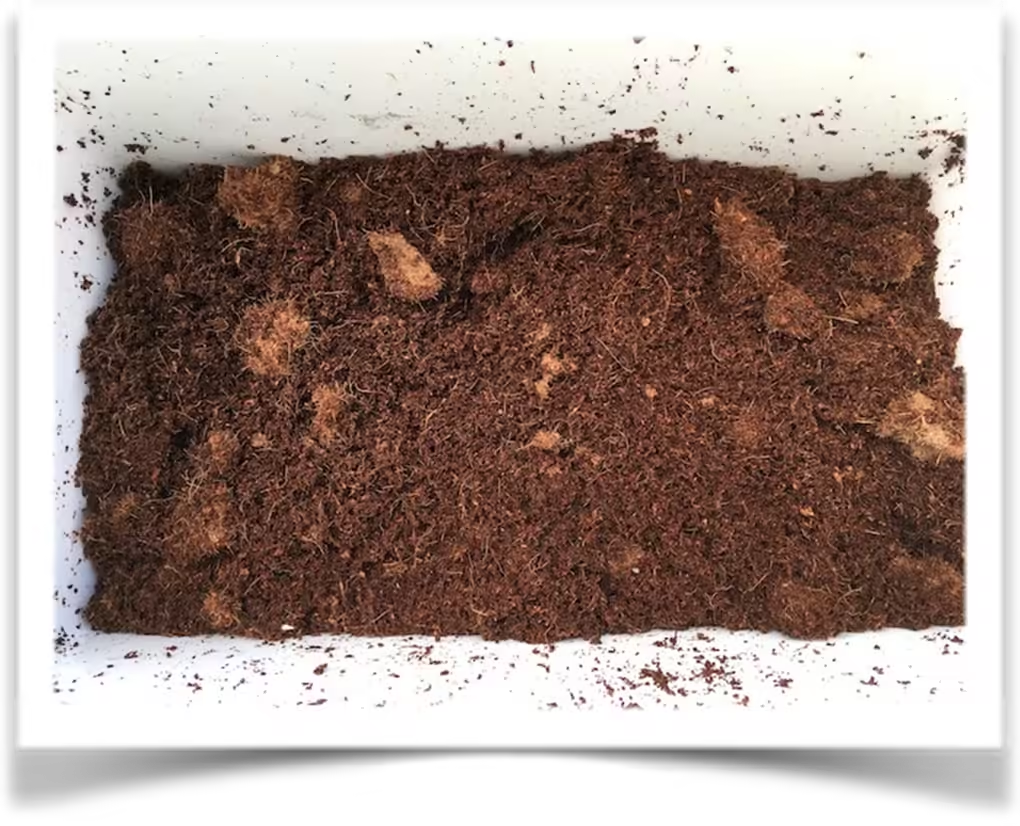
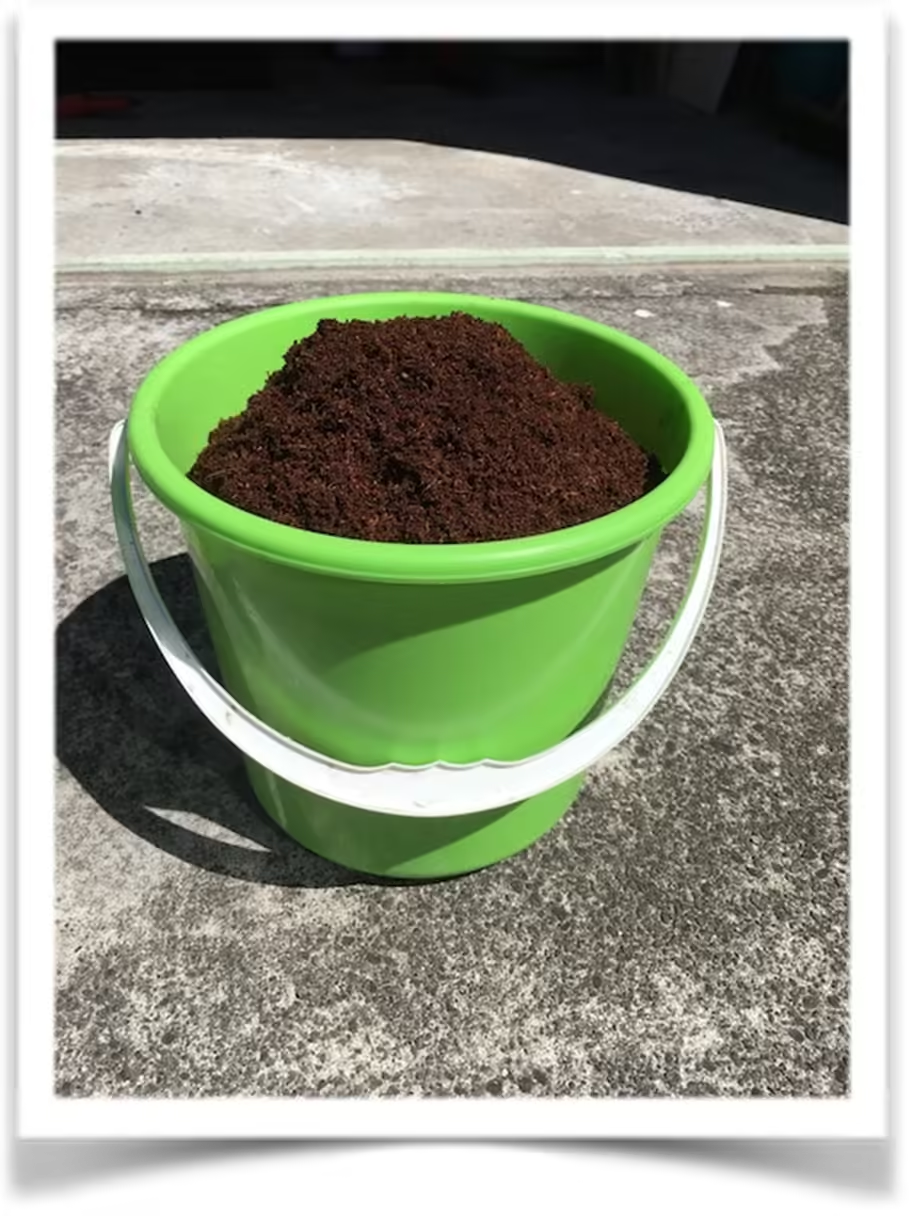
Humanure is the composted end product that results from the aerobic breakdown of human solid waste inside a composting toilet. When your composting toilet is functioning correctly — with the right moisture balance, ventilation, and carbon-rich bulking material — the result is a dark, soil-like material that looks and smells much like ordinary garden compost.
It’s important to understand that humanure from a well-managed composting toilet is very different from raw sewage. The composting process significantly reduces pathogens, breaks down organic matter, and produces a stable material that can be safely returned to the earth. On average, a single person using a composting toilet will produce around 10 litres of compost per year — a surprisingly small amount.
New Zealand Regulations and Standards
In New Zealand, composting toilets and the disposal of their end product are governed by several key frameworks:
AS/NZS 1546.2:2008 is the primary standard covering waterless composting toilets for residential use in New Zealand and Australia. It sets out performance requirements for toilet systems and provides guidelines for the safe removal and disposal of composted material — including the minimum burial depth required.
The New Zealand Building Code (NZBC) — specifically Clause G13 (Foul Water) — governs how human waste must be managed in buildings. Composting toilets are recognised as an acceptable solution provided they meet the relevant standards and local council requirements.
Regional and district councils have their own rules around on-site wastewater management. In most regions, the disposal of composted material must comply with the council’s resource management plan. Some councils treat this as a permitted activity; others may require resource consent. Always check with your local council before finalising your disposal arrangement.
How Long Does Composting Take?
This depends on your toilet type:
- Self-contained units (such as the OGO Origin, OGO Nomad, and Nature’s Head) collect material in a removable chamber. Because these are compact systems, the material inside is typically partially composted — not fully composted — when removed. It requires further treatment before final disposal.
- Larger continuous composting systems can produce more fully composted material over a longer period within the unit itself.
For the compact self-contained units most commonly used in tiny homes, cabins, campervans, and off-grid living in New Zealand, the material removed from the toilet should be treated as partially composted and requires a secondary treatment stage.
Setting Up a Secondary Treatment System
If you have a self-contained composting toilet, the recommended approach in New Zealand is to set up a secondary treatment system (STS) — a dedicated outdoor composting bin where material from your toilet continues to mature before final disposal.
How to set it up:
- Use a dedicated compost bin with a secure, close-fitting lid — keep it completely separate from your food or garden compost
- When emptying your toilet, add the contents to the STS along with additional carbon-rich bulking material such as sawdust, dry leaves, or straw
- Cover each addition well with bulking material
- Keep the bin covered and secure to exclude insects, vermin, and animals at all times
- Ensure no foul odours are detectable at your property boundary
- Allow the material to mature for a minimum of 6 to 12 months — in colder climates, up to 2 years may be advisable to ensure full pathogen reduction
- The compost is ready when it has reduced to roughly 50% of its original volume, has a soil-like appearance, and has no offensive odour
Important: Do not add kitchen scraps or food waste to your STS — it is dedicated to composting toilet material only. Adding foreign materials can attract flies and contaminate the process.
Disposal of the End Product: Burial Requirements
Once the material has matured in your secondary treatment system, it must be disposed of correctly. Under the NZ Waterless Composting Toilets Standard, humanure must be buried on-site at a minimum depth of 150mm in soil. This prevents surface run-off, minimises human exposure, and stops the spread of pathogens by animals and insects.
NZ burial requirements at a glance:
- Minimum burial depth: 150mm (as required by the NZ Waterless Composting Toilets Standard)
- Bury on your own property in a designated land application area
- Do not apply to vegetable gardens or any food crops — this applies even when fully composted
- Safe for use around trees (including fruit and nut trees) and ornamental gardens — you can dig a deeper hole, add the compost, and plant directly over it
- Keep away from waterways — never dispose near streams, bores, or water bodies; maintain the setback distances required by your regional council
- Do not discharge to water — this is prohibited under the Resource Management Act
Practical tip — the offal hole method: Many composting toilet users find it easiest to create a dedicated disposal area with a heavy steel or concrete lid. This gives you a permanent, accessible burial point — simply open, add your composted material, cover with 150mm of soil, and close the lid. No digging required each time.
Safe Handling Practices
When emptying your composting toilet and managing humanure, always follow basic hygiene precautions:
- Wear disposable gloves and consider a dust mask
- Wash hands thoroughly with soap and water after handling
- Use biodegradable bags where possible to contain material during transfer
- Store bagged material in a sealable container if immediate disposal to the STS isn’t possible
- If spillage occurs, wear a mask and gloves — in windy conditions, wet the material first to prevent airborne particles before cleaning up
What About Urine?
Most modern composting toilets — including the OGO range — separate urine from solids. This is important because keeping urine out of the composting chamber is what makes the system work effectively; excess moisture inhibits the composting process.
Separated urine (sometimes called “liquid gold”) is essentially sterile when fresh and can be:
- Diluted 10:1 with water and used as a nitrogen-rich liquid fertiliser around non-edible plants and trees
- Disposed of at a dump station when no suitable land area is available
- Diluted and dispersed on soil away from waterways and vegetable gardens
Never dispose of urine directly into waterways or concentrated onto the same patch of soil repeatedly.
Composting Toilet Waste When Off-Grid or Mobile
For those using composting toilets in campervans, tiny homes on wheels, or remote off-grid cabins where on-site burial is not immediately practical, solid waste can also be disposed of at dump stations throughout New Zealand. Biodegradable bags make this straightforward and hygienic.
A current list of dump station locations around New Zealand is available through the Campermate app and the NZMCA (New Zealand Motor Caravan Association) website.
Checking with Your Council
Because regional rules vary across New Zealand, it’s worth checking with your local or regional council before finalising your disposal plan. Key questions to ask:
- Is disposal of composted toilet waste a permitted activity in my zone?
- Are there specific setback distances from waterways or boundaries I need to observe?
- Do I need resource consent for on-site disposal?
- Does my greywater system also need to be consented?
Remember that even if your composting toilet doesn’t require building consent in your situation, your greywater system (from showers, kitchen, and laundry) still needs to be properly managed and may require separate consent.
Frequently Asked Questions
Can I use humanure on my vegetable garden? No. Even when fully composted, humanure should not be used on food crops — particularly root vegetables or anything eaten raw. It is safe to use around fruit and nut trees, and in ornamental gardens, provided it is properly buried.
How do I know when my compost is ready? Ready compost will have reduced significantly in volume (roughly 50% of the original), look dark and soil-like, and have no offensive odour. If you’re unsure, leave it for another few months — more time is always safer than less.
What if I don’t have space to bury on-site? If on-site burial is not possible, dispose of your composted material at a dump station. Many NZ dump stations accept composting toilet waste.
Do I need a secondary treatment system for every composting toilet? Larger, continuous composting systems with long retention times may not require a separate STS — check your manufacturer’s guidance. For compact self-contained units (OGO, Nature’s Head, etc.), an STS is strongly recommended before burial.
Summary
Managing humanure responsibly is straightforward when you follow the process:
- Use your composting toilet correctly with appropriate bulking material
- Empty into a dedicated secondary treatment bin
- Allow 6–12 months of further composting (longer in cold climates)
- Bury the end product on-site at a minimum depth of 150mm, away from food crops and waterways
- Handle with gloves and wash hands thoroughly
Done correctly, humanure is a valuable resource rather than a problem — returning nutrients to the soil in a safe, sustainable, and environmentally responsible way that genuinely closes the loop.
Looking for the right composting toilet for your home, cabin, or tiny house? Browse our full range including the OGO Origin and OGO Nomad, or get in touch with our team for personalised advice.